

Running an online store successfully depends on more than just great products; you also need a reliable, fast, and secure website hosting service.
The best web hosting for e-commerce provides seamless performance, scalability, and robust security, ensuring that your customers enjoy a smooth shopping experience.
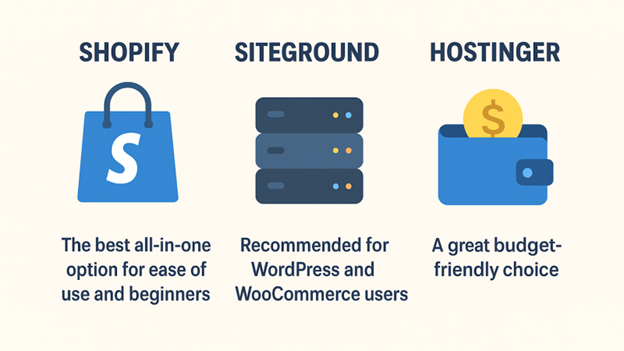
In this guide, I’ll explore the 7 best web hosting platforms for e-commerce businesses in 2025. I will cover both all-in-one solutions, such as Shopify, and self-managed hosting providers, like SiteGround and Hostinger.
1. Shopify: The Best All-in-One Hosting for E-Commerce
From my experience, Shopify is hands down one of the most reliable website hosting services for e-commerce. What I love most about it is that I don’t have to worry about the technical side of hosting. Everything, from security to updates and payment integrations, is managed in the background, allowing me to focus on growing my store.
The platform comes with built-in tools like product management, secure payment gateways, abandoned cart recovery, and marketing apps. Of course, the monthly subscription can feel higher compared to cheap website hosting providers, but in my view, the time and stress it saves easily justify the cost.
Pros & Cons of Shopify
Pros:
- Fully managed platform, no hosting headaches.
- Excellent security and scalability for growing businesses.
- Huge app store and built-in features tailored to e-commerce.
- Beginner-friendly with professional templates.
Cons:
- Monthly fees are higher than traditional website hosting.
- Less flexibility if you want complete control compared to WordPress.
- Transaction fees if you don’t use Shopify Payments.
Best For
I recommend Shopify to anyone who wants a professional online store without having to manage servers or deal with technical issues.
2. Wix: Best for Beginners & Creative Businesses
I’ve always seen Wix as the most beginner-friendly option when it comes to website hosting services with e-commerce functionality. The drag-and-drop builder is intuitive, making it easy for me to design a store that matches my brand without needing to touch a single line of code.
What stands out about Wix is its creative flexibility. If you’re running a boutique, a personal brand, or any business where visual presentation matters, Wix gives you the freedom to design something truly unique. The e-commerce tools are simpler compared to Shopify, but they still cover the essentials: product listings, payments, shipping integrations, and even social media selling.
Pros & Cons of Wix
Pros:
- Extremely easy to use, great for beginners.
- Drag-and-drop design with lots of creative freedom.
- Affordable compared to some other website hosting services.
- Integrated e-commerce features with app extensions.
Cons:
- Limited scalability for large or complex stores.
- Not as feature-rich as Shopify for advanced e-commerce.
- Performance can be slightly slower under heavy traffic.
Best For
I recommend Wix for small e-commerce businesses, creative professionals, and beginners who want to get online quickly with minimal technical knowledge.
3. Squarespace: Best for Design-Focused Stores
As far as website hosting services go, Squarespace is one of the most design-focused platforms I’ve used. The templates are polished, modern, and ideal for e-commerce businesses that place a high value on visual appeal. From my experience, it’s not as feature-heavy as Shopify for large-scale e-commerce, but it covers the essentials. This includes product management, secure checkout, mobile-optimised templates, and even built-in SEO tools.
Pros & Cons of Squarespace
Pros:
- Beautiful, professional templates that make stores look premium.
- All-in-one platform (hosting + design + selling).
- Great mobile optimisation and SEO features.
- Smooth user experience, even for non-technical users.
Cons:
- Not as scalable as Shopify or WordPress.
- Limited advanced e-commerce features for complex stores.
- Less flexibility compared to open-source platforms.
Best For
I’d recommend Squarespace if you want your online store to look sleek and modern without spending hours on design.
4. SiteGround: Best Hosting Company for WordPress & WooCommerce
When it comes to the best hosting company for WordPress and WooCommerce, SiteGround is one of my top picks. I’ve hosted WordPress sites on it before, and the speed and reliability stood out immediately. SiteGround also has excellent security features and automatic updates, which gives me peace of mind when managing an online store.
It isn’t the cheapest option compared to other affordable website hosting providers, such as Hostinger, but the value lies in its performance and support.
Pros & Cons of SiteGround
Pros:
- Excellent speed and reliability for WordPress/WooCommerce sites.
- Top-notch customer support.
- Strong security features and automatic updates.
- Scalable plans for growing e-commerce businesses.
Cons:
- Pricier than some budget website hosting providers.
- Limited storage on entry-level plans.
- No built-in store builder, you’ll need WordPress + WooCommerce setup.
Best For
I recommend SiteGround if you’re building a WooCommerce store on WordPress and want performance, security, and responsive support.
5. Bluehost: Popular WooCommerce Hosting Provider
Bluehost was one of the first hosting platforms I tried for WordPress, and I can see why it’s still so popular. If you’re looking for the best web hosting for e-commerce with WooCommerce integration, Bluehost makes the process super easy. They even have one-click WooCommerce installations, which saved me a lot of time during setup.
Pros & Cons of Bluehost
Pros:
- Easy WooCommerce integration with one-click installation.
- Affordable plans with good features for small stores.
- Free SSL and a domain are included with most plans.
- Beginner-friendly dashboard and setup.
Cons:
- Performance is decent, but not the fastest.
- Customer support isn’t always consistent.
- Upsells during checkout can feel pushy.
Best For
I recommend Bluehost if you want a website hosting service that’s affordable, beginner-friendly, and still offers e-commerce functionality.
6. DreamHost: Reliable WordPress Hosting for Online Stores
Whenever I’ve wanted a balance between affordability and reliability for WordPress, DreamHost has been a solid choice. Their hosting is officially recommended by WordPress, and in my experience, that shows. I’ve hosted smaller e-commerce sites on DreamHost, and I found the uptime and speed to be consistently high, which is crucial when running an online store.
Pros & Cons of DreamHost
Pros:
- Officially recommended by WordPress.
- Reliable uptime and solid performance.
- Transparent, affordable pricing.
- WooCommerce-optimised hosting plans.
Cons:
- Customer support can be slower at times.
- Interface isn’t as beginner-friendly as Bluehost.
- Not as many advanced e-commerce features out-of-the-box.
Best For
I recommend DreamHost for WordPress users seeking reliable hosting with transparent pricing. It’s ideal if you’re running a WooCommerce store and value stability without overpaying for extras.
7. Hostinger: Cheap Website Hosting for Small Businesses
If budget is your top concern, I highly recommend Hostinger. It’s by far one of the best options for cheap website hosting, and surprisingly, the performance is excellent for the price. I’ve tested Hostinger on smaller e-commerce projects, and it handled them smoothly without breaking the bank.
What I love about Hostinger is its beginner-friendliness, despite being an affordable option. The control panel is easy to use, and you get features like free SSL, one-click installs, and even AI website tools. For me, it’s the kind of platform that makes starting an online store accessible to everyone, even if you’re on a tight budget.
Pros & Cons of Hostinger
Pros:
- Extremely affordable plans.
- Good performance for the price.
- Free SSL and beginner-friendly dashboard.
- AI tools and one-click WordPress installs.
Cons:
- Limited scalability for very large stores.
- Customer support isn’t as fast as premium hosts.
- Some features are locked behind higher-tier plans.
Best For
I recommend Hostinger for small e-commerce businesses, startups, or anyone launching on a budget. It’s the best e-commerce hosting option for small businesses, offering affordability without compromising essential features.
Comparison Table: Best E-Commerce Hosting Platforms at a Glance
| Hosting Platform | Best For | Key Strengths | Potential Drawbacks |
| Shopify | All-in-one e-commerce solution | Built-in tools, scalability, ease of use | Higher monthly fees, less flexibility |
| Wix | Beginners & creatives | Drag-and-drop builder, affordable, creative freedom | Limited scalability, basic e-commerce features |
| Squarespace | Design-focused stores | Beautiful templates, all-in-one platform | Less flexible, not built for complex stores |
| SiteGround | WordPress/WooCommerce | Speed, support, security | Pricier than budget hosts, limited storage |
| Bluehost | WooCommerce beginners | Easy setup, affordable, free SSL | Performance is average, support can vary |
| DreamHost | Reliable WordPress hosting | Transparent pricing, solid uptime | Support slower, less polished UI |
| Hostinger | Budget-conscious small businesses | Very cheap, good performance, beginner-friendly | Limited scalability, fewer advanced features |
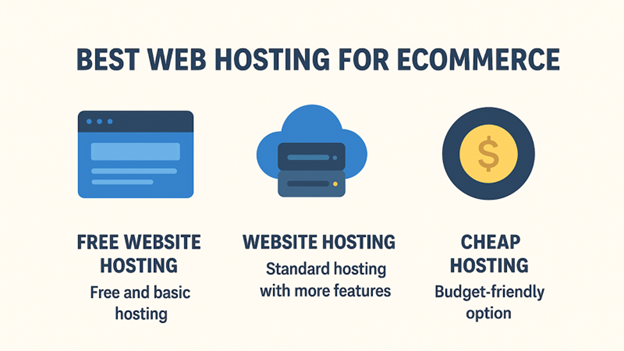
| Free Hosting | Testing & practice only | No cost, good for learning | Poor reliability, no security, unprofessional for e-commerce |
Conclusion
After testing and working with different website hosting services, I’ve realised there’s no one-size-fits-all solution when it comes to e-commerce. The best web hosting for e-commerce really depends on your goals, budget, and the level of control you want over your store.
Personally, I love the simplicity and all-in-one approach of Shopify; it just takes the stress out of hosting and lets me focus on sales. However, when I want creative freedom, Wix and Squarespace make it easy to build something beautiful with minimal effort.
One thing I’ve learned the hard way: free website hosting might sound appealing, but it’s not a good idea for a serious online store. If you’re planning to sell products and scale your business, investing in a reliable hosting service is always worthwhile.
At the end of the day, my advice is this: choose a platform that not only fits your budget but also matches your long-term vision for your e-commerce business. Whether you need an all-in-one platform like Shopify or a budget-friendly website hosting option like Hostinger, the right hosting partner can make a significant difference in how smoothly your business operates.
Check out our business productivity reviews for the best tool collections