

While Perplexity excels at rapid question-answering, alternatives focused on research depth, citation verification, and data extraction are emerging as essential tools for serious work. This guide examines the three best Perplexity alternatives for 2026, each excelling in different aspects of AI-powered research and discovery.
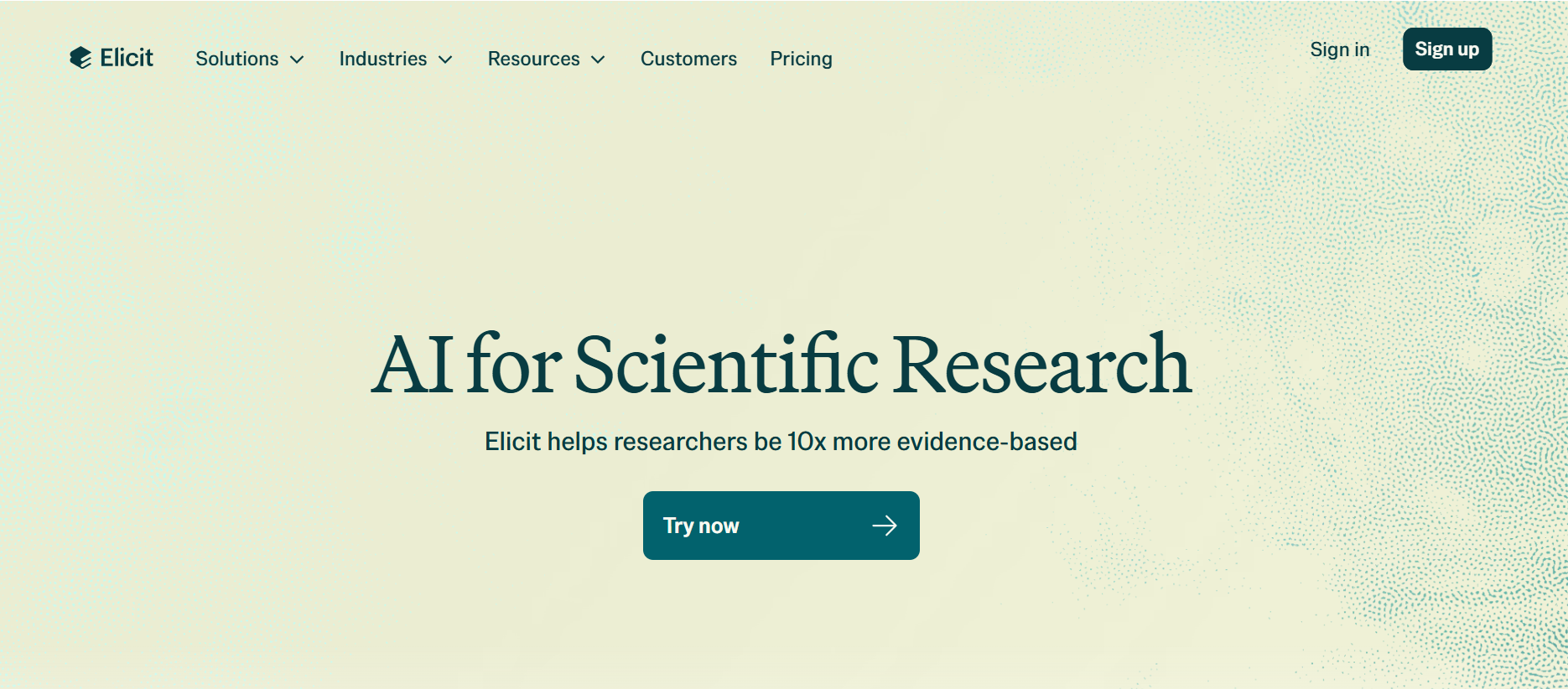
Elicit – Best for Academic Research & Literature Reviews
Elicit has established itself as the premier AI research assistant for academic work by automating the most time-consuming aspects of literature reviews. With access to over 125 million academic papers, Elicit enables researchers to find relevant studies, extract key findings, and synthesize evidence across dozens or hundreds of papers simultaneously. This capability transforms tasks that once required weeks of manual work into hours of guided research.
- The platform’s screening and summarization capabilities go far beyond simple keyword search. Researchers can define specific inclusion criteria based on study design, population characteristics, interventions, or outcomes.
- Elicit then automatically screens papers, extracting relevant data into customizable tables. This structured approach maintains the rigor academic research demands while dramatically accelerating the systematic review process. The tool identifies methodological details, sample sizes, key findings, and limitations across studies.
- For graduate students conducting thesis research, academics preparing systematic reviews, or R&D teams analyzing scientific literature, Elicit provides capabilities Perplexity cannot match. While Perplexity might summarize a few papers in response to a query, Elicit enables comprehensive analysis of entire research domains. The platform helps identify research gaps, track how ideas evolved over time, and synthesize findings across contradictory studies.
- Elicit’s citation verification and paper quality assessment features ensure academic rigor. The platform displays citation counts, publication venues, and peer-review status, helping researchers quickly evaluate study credibility.
- Data extraction capabilities enable users to pull specific information, effect sizes, confidence intervals, demographic data, into comparative tables. This transforms qualitative literature review into quantitative synthesis, supporting meta-analyses and evidence-based conclusions. For anyone conducting serious academic or scientific research, Elicit represents the gold standard that general-purpose AI search tools cannot approach.
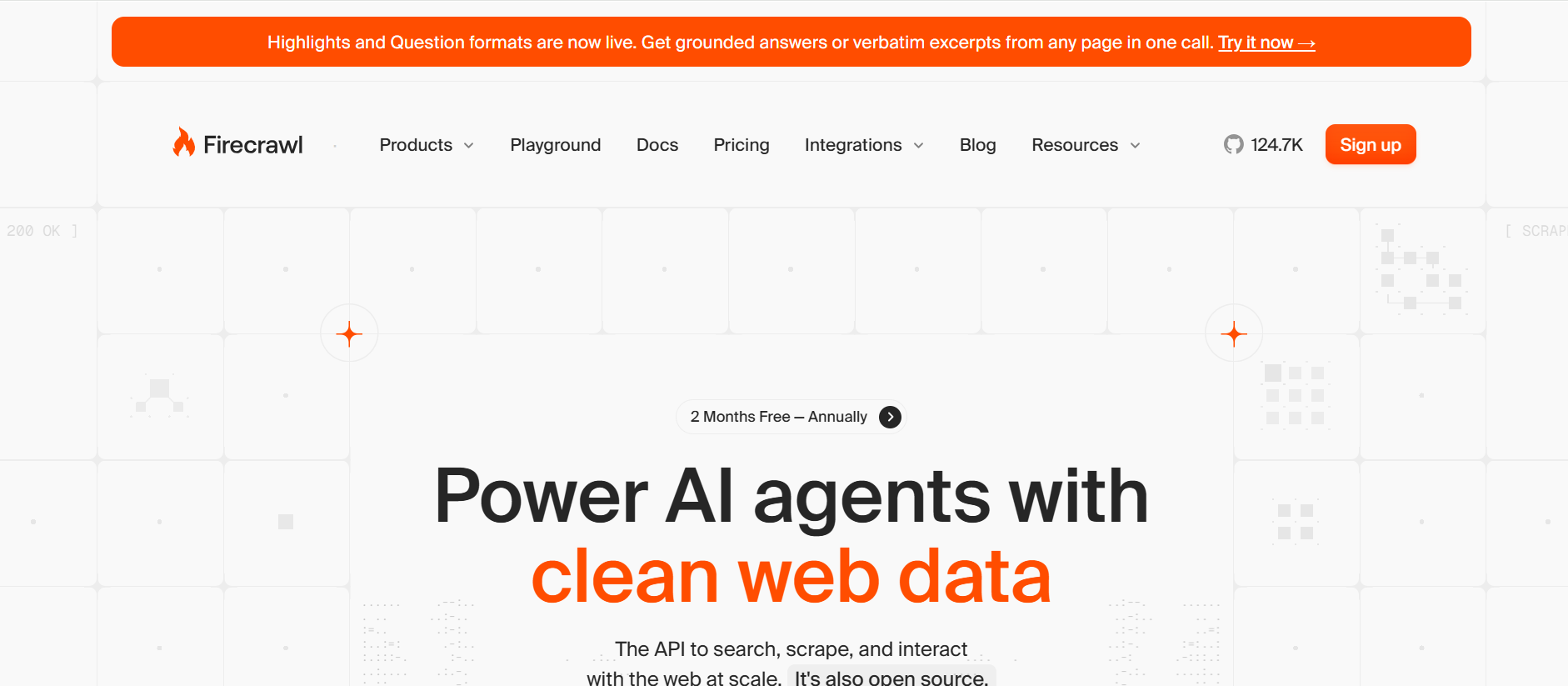
Firecrawl – Best for Structured Data Extraction & AI Agents
Firecrawl solves a completely different problem than conversational search engines: extracting clean, structured data from websites for AI systems and automation.
While Perplexity provides human-readable summaries, Firecrawl delivers machine-ready JSON and Markdown output optimized for feeding language models and building AI applications. This developer-focused tool has become essential for teams building retrieval-augmented generation systems and AI agents.
- The platform’s AI-powered web crawling goes beyond simple HTML scraping to intelligently extract content while removing navigation, advertisements, and formatting artifacts.
- Firecrawl understands page structure, identifies main content, and outputs clean data that LLMs can process reliably. For developers building knowledge bases or training AI systems on web content, this clean extraction saves countless hours of data preprocessing and significantly improves model performance.
- Multi-step agent-based research represents Firecrawl’s advanced capabilities. Rather than single-page extraction, the platform can execute complex crawling strategies: following links based on content relevance, extracting specific data fields across hundreds of pages, and organizing findings according to custom schemas. This automation enables AI systems to gather comprehensive information systematically, supporting applications from competitive intelligence to market research.
- For AI engineers, data scientists, and developers building intelligent systems, Firecrawl offers capabilities beyond Perplexity’s scope.
- The platform offers API access for programmatic integration, webhook support for automated workflows, and customizable extraction rules for specific data needs. Teams building RAG systems, automated research assistants, or AI-powered analytics platforms rely on Firecrawl’s reliable data pipelines. While non-technical users have little use for such tools, developers recognize Firecrawl as essential infrastructure for AI applications requiring current web data.
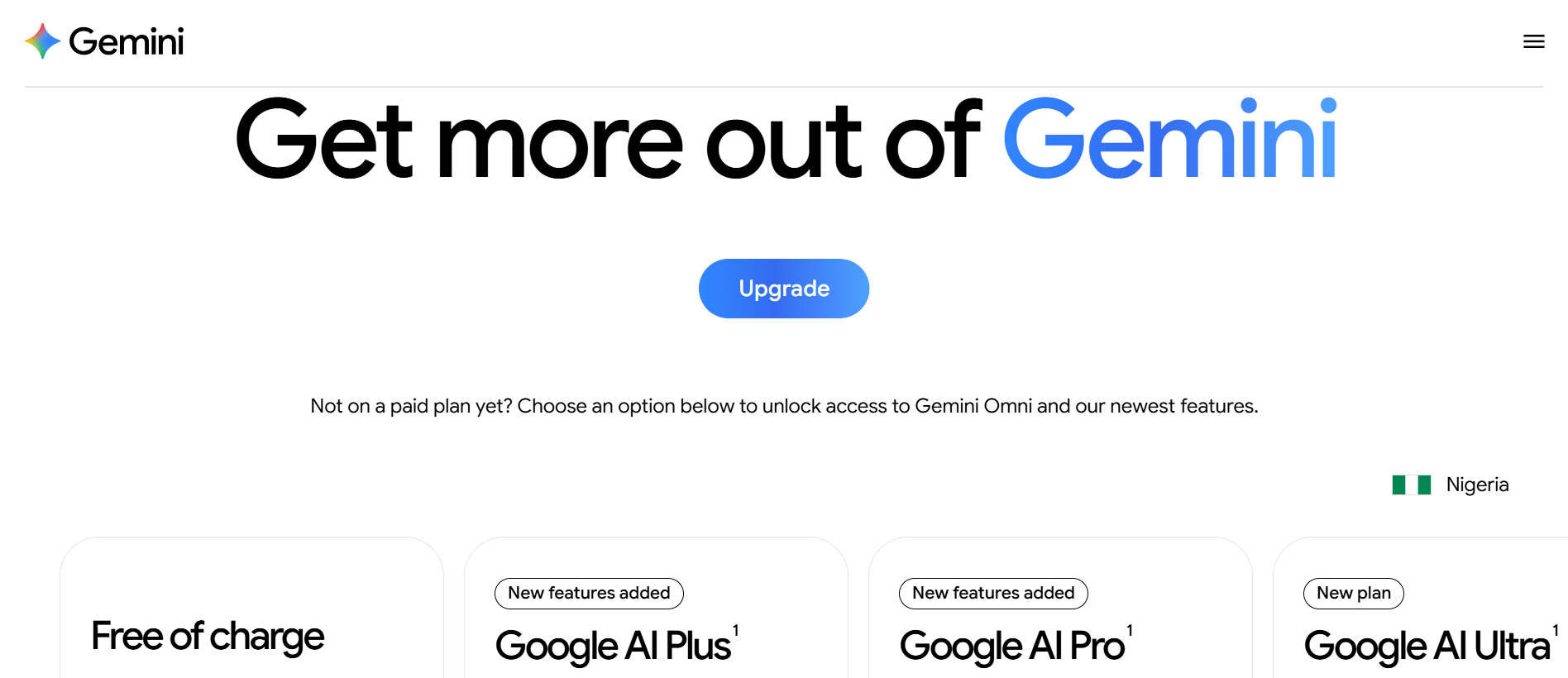
Google Gemini (v3) – Best General-Purpose Research Alternative
Google Gemini is the tech giant’s comprehensive answer to conversational AI search, combining Google’s search index with advanced language models and multimodal capabilities. The latest Gemini version integrates deeply with Google Search, providing not just summaries but direct access to Google’s vast knowledge graph and real-time web information. This integration gives Gemini unique advantages in breadth, recency, and reliability.
- NotebookLM, Google’s AI-powered research assistant built on Gemini, provides citation-backed research capabilities that bridge the gap between conversational AI and academic rigor. Users can upload documents, PDFs, and web sources, then interact conversationally while maintaining full source attribution. NotebookLM automatically cites claims, enables deep-diving into specific sources, and organizes research into structured notes. This combination of conversational ease with research integrity makes it particularly valuable for professional knowledge work.
- Gemini’s multimodal research capabilities extend beyond text to analyze images, videos, PDFs, and data visualizations. Researchers can ask questions about charts, extract data from scanned documents, or analyze visual content alongside textual information. This versatility supports diverse research workflows across different media types. The deep integration with Google Workspace means research findings flow seamlessly into Docs, Sheets, and Slides, supporting collaborative knowledge work.
- For professionals, teams, and general researchers seeking alternatives to Perplexity, Gemini offers the best balance of depth, usability, and ecosystem integration. While it may not match Elicit’s academic specialization or Firecrawl’s data extraction capabilities, Gemini provides superior general-purpose research across the widest range of topics.
- The platform benefits from Google’s continuous investment in search quality, fact-checking, and information reliability. Access to Google’s knowledge base, spanning news, academic papers, technical documentation, and more, gives Gemini unmatched breadth. For most users seeking deeper, more reliable research than Perplexity provides, Gemini represents the logical upgrade.
How to Choose the Right Perplexity Alternative for Your Needs
Your primary research context should guide tool selection.
- Academic researchers conducting literature reviews, systematic reviews, or meta-analyses require Elicit’s specialized capabilities. The platform’s paper screening, data extraction, and synthesis features directly support scholarly workflows that general-purpose tools cannot match. Graduate students, professors, and R&D teams benefit most from academic-focused alternatives.
- Technical expertise significantly influences the choice of appropriate tools. Developers and AI engineers building systems need Firecrawl’s structured data extraction and programmatic access. Non-technical users find such tools unnecessarily complex and should stick with conversational interfaces like Gemini or enhanced ChatGPT. Consider your team’s technical capabilities honestly, the most powerful tool is useless if users cannot operate it effectively.
- Citation requirements separate casual research from serious knowledge work. If your work requires source verification, academic citations, or publication-ready references, prioritize tools with robust citation features. Elicit and NotebookLM excel here. If you’re seeking quick background information or general knowledge, citation depth matters less than response quality and breadth.
- Finally, consider research volume and complexity. High-volume research benefits from automation and batch processing capabilities. Complex, multi-faceted investigations require tools supporting iterative refinement and systematic organization. Simple, occasional questions work fine with any quality conversational AI.
Conclusion – Choosing the Right AI Research Tool for 2026
The key to selecting the right tool lies in honest assessment of your research requirements. Academic work demands Elicit’s rigor and depth. AI development requires Firecrawl’s structured extraction. General knowledge work benefits from Gemini’s balance of capabilities. Don’t choose based on features alone—match tools to your actual workflows, technical capabilities, and research goals.
As AI research tools continue advancing in 2026, the trend toward specialization and depth will accelerate. The era of one-size-fits-all search is ending, replaced by an ecosystem of purpose-built tools optimizing for specific research contexts. Whether you’re conducting academic literature reviews, building AI systems, or pursuing professional research, alternatives to Perplexity now offer capabilities that transform how we discover, analyze, and synthesize knowledge. Choose wisely, and these tools will dramatically amplify your research capabilities.
Related Article: 3 Best Zoho Alternatives