

While Microsoft Clarity offers free heatmaps and session recordings, many teams need more advanced capabilities to optimize conversions and improve user experience. The demand for sophisticated behavioral analytics has grown exponentially as businesses recognize that raw traffic numbers tell only part of the story.
Modern UX teams require tools that go beyond basic tracking to deliver actionable insights through AI-powered analysis, advanced segmentation, and integrated feedback mechanisms. Privacy regulations have raised the stakes, making compliant analytics platforms more critical than ever. Whether you’re a product manager seeking deeper user insights, a UX designer identifying friction points, or a CRO specialist optimizing conversion funnels, the right behavioral analytics platform can transform your decision-making process. This guide explores the top five Microsoft Clarity alternatives for 2026, helping you find the perfect tool to understand your users and drive meaningful improvements.
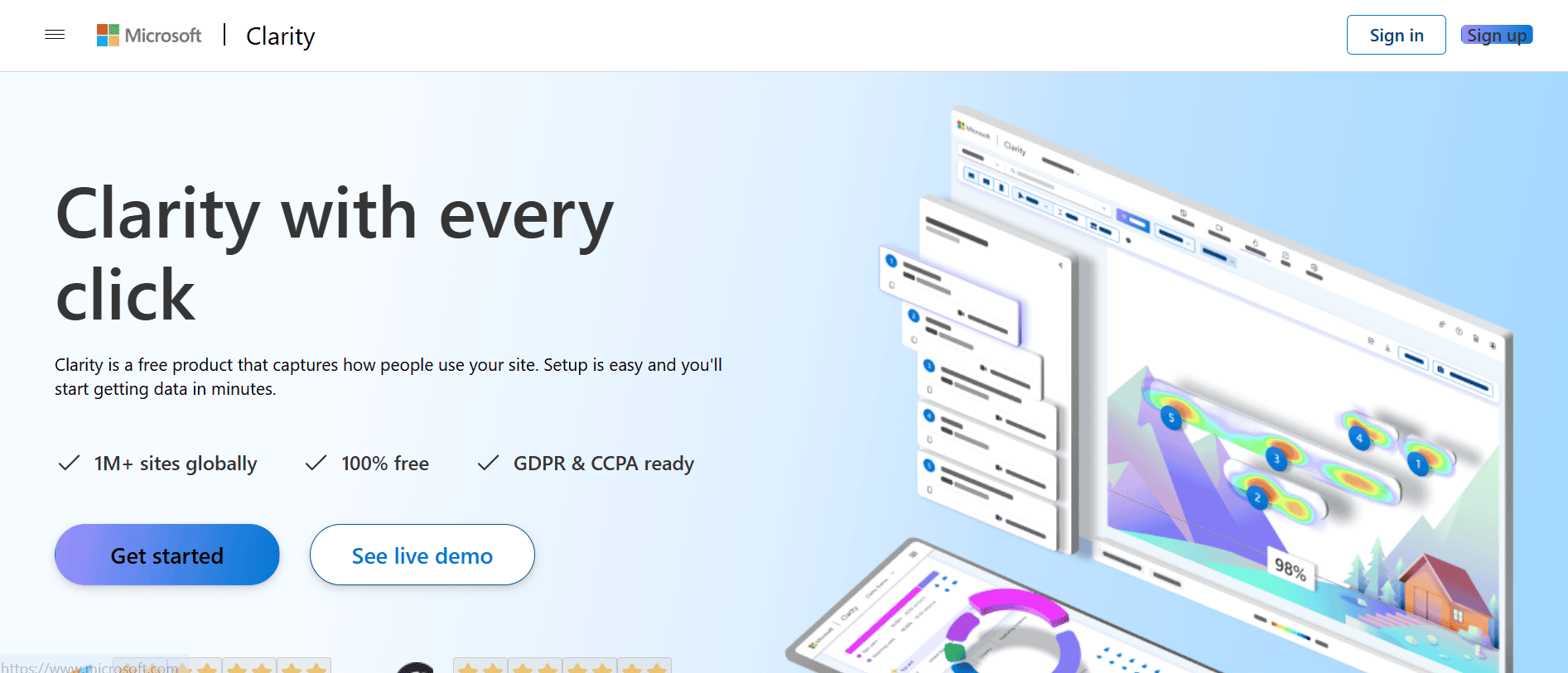
What Makes a Strong Behavioral Analytics Tool ?
Advanced heatmap capabilities form the foundation of effective behavioral analytics. Beyond simple click tracking, modern tools capture scroll depth, mouse movement patterns, rage clicks indicating frustration, and attention mapping showing where users focus.
The best platforms automatically generate heatmaps for every page, enabling historical comparisons and trend analysis. Look for tools that segment heatmaps by user characteristics, traffic sources, and device types to understand how different audiences interact with your site.
- Session replay quality separates good tools from great ones. High-fidelity recordings that accurately reproduce user interactions, including dynamic content and single-page applications, provide invaluable context. Powerful filtering capabilities let you quickly find relevant sessions based on specific actions, errors, or user attributes. The ability to skip inactive periods, adjust playback speed, and annotate sessions saves countless hours of analysis time.
- User feedback and survey capabilities close the loop between observation and understanding. Behavioral data shows what users do, but feedback reveals why they do it. Integrated survey tools, feedback widgets, and user recruitment features enable comprehensive UX research without juggling multiple platforms. The best solutions combine quantitative behavioral data with qualitative insights seamlessly.
- Funnel and conversion analysis capabilities transform raw behavioral data into business intelligence. Visualization tools that map user journeys, identify drop-off points, and calculate conversion rates at each stage provide clear direction for optimization efforts. Privacy-first tracking ensures compliance while maintaining analytical depth. Look for platforms offering cookieless tracking options, transparent data practices, and flexible consent management.
- Finally, scalability and integrations determine long-term viability. Your behavioral analytics platform should grow with your business, handling increased traffic without performance degradation. Native integrations with your existing tech stack—analytics platforms, marketing automation tools, customer data platforms, and development workflows—eliminate data silos and enable comprehensive analysis.
Top 5 Microsoft Clarity Alternatives
1. Hotjar – Best All-in-One UX & Feedback Platform
Hotjar has established itself as the gold standard for all-in-one user experience analytics by seamlessly combining behavioral tracking with user feedback. The platform’s heatmaps, session recordings, and surveys work together to answer both what users do and why. This integrated approach eliminates the need for multiple tools and provides a comprehensive view of the user experience.
What distinguishes Hotjar is its focus on understanding user motivation. While competitors emphasize technical metrics, Hotjar makes it easy to capture contextual feedback at critical moments.
- On-site surveys, feedback widgets, and user-interview recruitment tools enable direct conversations with your audience. The platform’s filtering capabilities let you segment recordings and heatmaps by virtually any criteria, revealing patterns across different user groups.
- CRO specialists and UX researchers particularly value Hotjar’s balance between depth and usability. The interface remains intuitive even with advanced features, enabling teams to start gathering insights immediately.
- Compared to Clarity, Hotjar offers superior filtering, integrated feedback collection, and team collaboration features.
The trade-off is cost—Hotjar’s paid plans can become expensive for high-traffic sites. However, for teams serious about UX optimization and willing to invest in comprehensive insights, Hotjar delivers exceptional value through its unified platform approach.
2. Lucky Orange – Best for eCommerce & Real-Time Insights
Lucky Orange distinguishes itself through real-time visitor monitoring and conversion-focused analytics designed specifically for online stores. The platform’s live visitor dashboard shows exactly who’s on your site right now, what they’re viewing, and where they’re struggling. This real-time visibility enables immediate intervention through integrated live chat, turning analytics into direct customer engagement.
- For eCommerce businesses, Lucky Orange provides specialized tools that directly impact revenue. Dynamic heatmaps update in real-time, showing which products attract attention and where checkout friction occurs. Conversion funnel tracking visualizes the path from browsing to purchase, highlighting exactly where potential customers abandon their journey. Form analytics identify problematic fields causing cart abandonment, while polls and surveys capture customer sentiment at critical decision points.
- The combination of behavioral analytics with live chat creates unique opportunities for eCommerce teams. When you see a high-value visitor hesitate at checkout, proactively offer assistance.
- Lucky Orange’s recordings automatically tag sessions with revenue data, making it easy to analyze high-value customer behavior. While it offers less advanced analysis than enterprise platforms,
- Lucky Orange excels at what matters most to online retailers: understanding and improving the buying experience in real time.
3. Mouseflow – Best for Detailed Behavior & Form Analytics
Mouseflow takes a technical approach to behavioral analytics with automatic heatmap generation for every page and sophisticated friction detection algorithms. The platform automatically creates six different types of heatmaps, click, movement, scroll, attention, geo, and live, providing comprehensive visibility into user interaction patterns. This automation eliminates manual configuration and ensures no page goes unanalyzed.
- Where Mouseflow particularly excels is form analytics and frustration detection. The platform’s friction score automatically identifies problematic pages by analyzing rage clicks, excessive scrolling, and error messages.
- Form analytics go beyond basic field tracking to measure hesitation time, field rewriting, and abandonment patterns. These insights directly inform optimization efforts by highlighting exactly where users struggle with your forms and checkout processes.
- UX optimization workflows benefit from Mouseflow’s funnel analysis and session filtering capabilities. You can create complex funnels tracking multi-step processes, compare conversion rates across segments, and identify specific sessions where users encountered problems.
- The platform’s feedback campaigns and user recruitment tools enable targeted qualitative research. While the interface feels more technical than consumer-focused alternatives, teams focused on data-driven optimization appreciate Mouseflow’s comprehensive approach to understanding and eliminating friction throughout the user journey.
4. FullStory – Best for Advanced Session Replay & DX Intelligence
FullStory operates at the enterprise end of behavioral analytics with its Digital Experience Intelligence platform. Unlike simple session replay tools, FullStory captures every interaction, automatically indexes all user actions, and enables powerful search capabilities across your entire user base. You can search for any combination of behaviors, find users who experienced specific errors, or analyze patterns across thousands of sessions instantly.
- The platform’s session search and segmentation capabilities set it apart from alternatives. FullStory’s omnisearch lets you query user behavior like a database, find all users who clicked a specific button but didn’t complete checkout, or locate sessions with JavaScript errors on particular pages. This granular analysis supports both product development and UX optimization workflows. Development teams use FullStory to reproduce bugs, while product managers analyze feature adoption patterns and identify workflow improvements.
- Enterprise product and UX teams value FullStory’s depth and reliability, though this power comes with complexity and cost. The platform integrates deeply with product development workflows, supporting collaboration between design, development, and product management.
- Compared to Microsoft Clarity’s simplicity, FullStory offers enterprise-grade capabilities including advanced privacy controls, detailed user journey mapping, and comprehensive API access. For large organizations requiring sophisticated behavioral analytics and willing to invest in premium capabilities, FullStory delivers unmatched digital experience intelligence.
5. Zoho PageSense – Best for Conversion Optimization & Testing
Zoho PageSense combines behavioral analytics with conversion rate optimization tools in a unified, affordable platform. Beyond heatmaps and session recordings, PageSense includes A/B testing, split URL testing, and personalization capabilities. This all-in-one approach eliminates the need for separate testing tools, streamlining the optimization workflow from insight discovery to implementation and validation.
- The platform’s funnel visualization and goal tracking connect behavioral data directly to business outcomes. You can create conversion funnels, set goals for specific user actions, and measure how changes affect key metrics. Form analytics identifies problematic fields, while polls and surveys capture visitor feedback. PageSense’s personalization engine lets you tailor content based on visitor segments, creating targeted experiences that improve conversion rates.
- For businesses already using the Zoho ecosystem, PageSense offers seamless integration with Zoho CRM, Marketing Automation, and other Zoho products. This integration creates a unified view of customer behavior across marketing, sales, and web analytics.
- While PageSense may lack the advanced features of premium platforms like FullStory, it delivers exceptional value for growing businesses needing comprehensive CRO capabilities without enterprise pricing. The platform balances feature depth with usability, making sophisticated optimization accessible to teams without dedicated analytics specialists.
How to Choose the Right Microsoft Clarity Alternative
Your choice of behavioral analytics platform should align with your primary objectives.
- UX research teams need comprehensive user feedback capabilities and qualitative research tools, making Hotjar’s integrated approach ideal. Conversion rate optimization specialists benefit from platforms combining analytics with testing capabilities like Zoho PageSense. Product teams debugging complex applications require technical depth offered by FullStory or LogRocket. Define your core use case before evaluating features.
- Website size and traffic volume significantly impact platform selection and costs. Most behavioral analytics tools price based on monthly sessions or pageviews, making high-traffic sites expensive to analyze. Calculate your expected monthly sessions and compare pricing tiers carefully. Some platforms offer generous free tiers suitable for small sites, while others target enterprise customers with unlimited plans. Consider growth trajectory—will your chosen platform scale affordably as traffic increases?
- Budget constraints require balancing capabilities against costs. Free tools like Microsoft Clarity provide basic functionality but limited analysis depth. Mid-tier platforms like Hotjar and Lucky Orange offer strong capabilities at reasonable monthly costs. Enterprise platforms like FullStory deliver advanced features with enterprise pricing. Remember that the cheapest option rarely proves most cost-effective if it fails to deliver actionable insights. Calculate ROI based on optimization improvements, not just subscription costs.
- Privacy and compliance requirements increasingly influence platform selection. Organizations operating in regulated industries or serving European customers need robust consent management, data residency options, and transparent data practices. Verify that your chosen platform supports your compliance needs, including GDPR, CCPA, and industry-specific regulations. Privacy-first alternatives may sacrifice some functionality but offer peace of mind regarding regulatory compliance.
Finally, assess team skill level and available resources honestly. Sophisticated platforms require significant time investment for setup, analysis, and optimization. If you lack dedicated analytics resources, prioritize tools with excellent usability and automated insights. The most powerful platform delivers no value if your team cannot effectively use it. Start with user-friendly options and graduate to more advanced tools as expertise develops.
Related Article: 3 Best Perplexity Alternatives